










Solar panels for landlords: your route to EPC C by 2030
Solar panels for landlords are no longer a green-sentiment purchase, they are a capital-planning decision driven by compliance. The Warm Homes Plan confirmed on 21 January 2026 that every privately rented home in England must reach EPC band C by 1 October 2030, backed by a 10,000 pound per-property cost cap and 15bn pounds of public investment. For roughly 2.5 million sub-C rental homes that is a fixed deadline, not a debate. Solar alone moves the new fabric-based EPC less than insulation does, but a modest array paired with the cheapest fabric measures is one of the most cost-effective ways to lift a D or E property over the line while cutting tenant bills, improving lettability and protecting asset value. The honest landlord question is not "what will I save", because in most lets the tenant pays the bill, it is "what protects my yield, my voids and my compliance position", and that is the conversation national installers consistently fail to have.
Why landlords install solar: EPC, MEES, lettability and capital value
The minimum energy efficiency standard (MEES) is what makes this unavoidable. Domestic MEES currently sets an EPC E floor with a 3,500 pound cap, but under the Warm Homes Plan that rises to EPC C by 1 October 2030 with a 10,000 pound cap, and improvements made from October 2025 onward already count toward it. For a landlord the returns split clearly. Where the tenant pays the electricity bill, which is most single lets, you do not get the energy saving at all, so the value is the EPC band uplift toward the mandatory C, a higher and more defensible rent, faster re-lets (a lower-bills property lets quicker), Smart Export Guarantee income you can keep where the system is in your name, and a measurable lift in resale and refinance value as lenders and buyers increasingly price in EPC risk. Where you pay the bill (bills-inclusive HMOs, communal supply, a commercial floor), self-consumption returns real cash on top. Establishing who pays the bill is the single most important variable in the whole landlord business case.
How we size systems across a portfolio
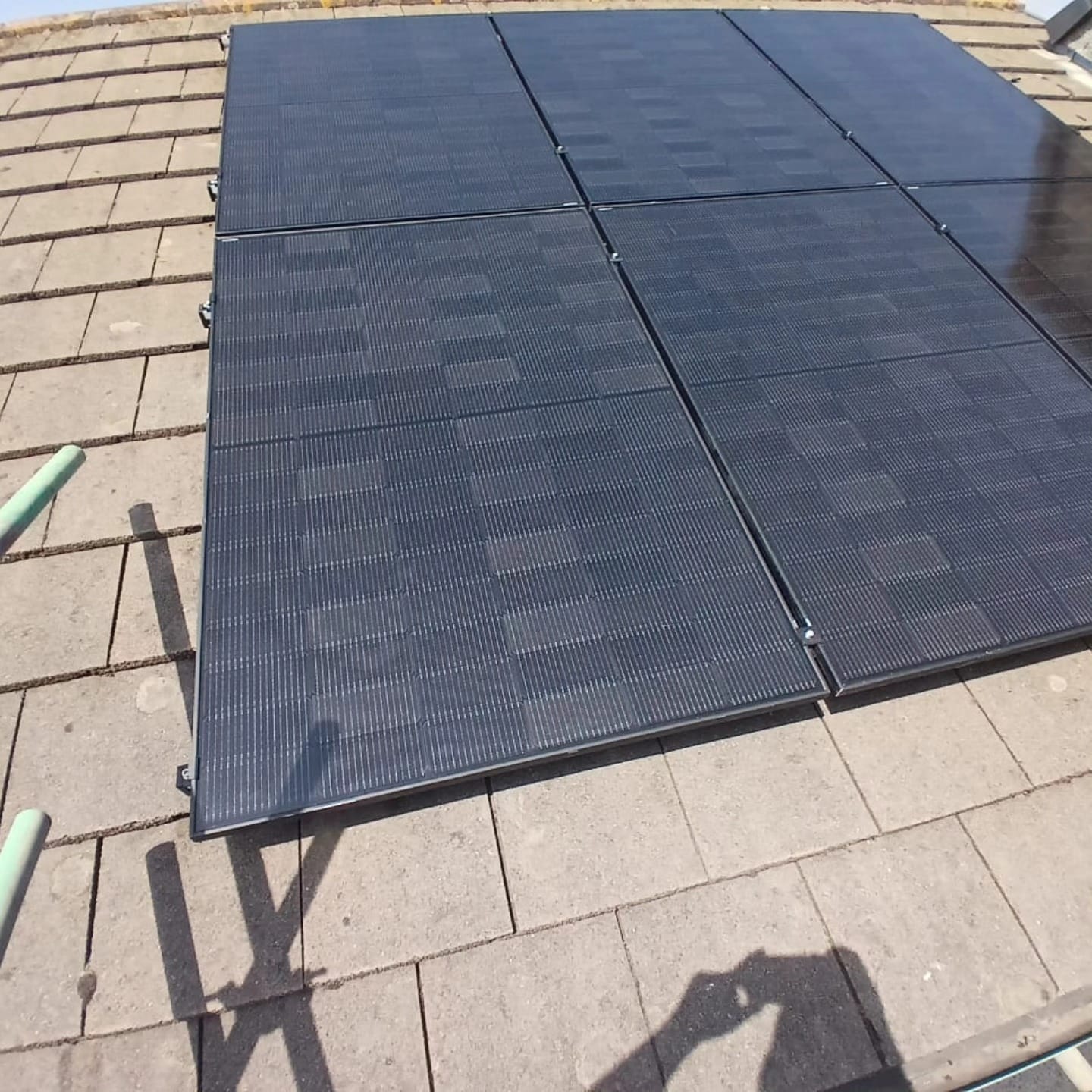
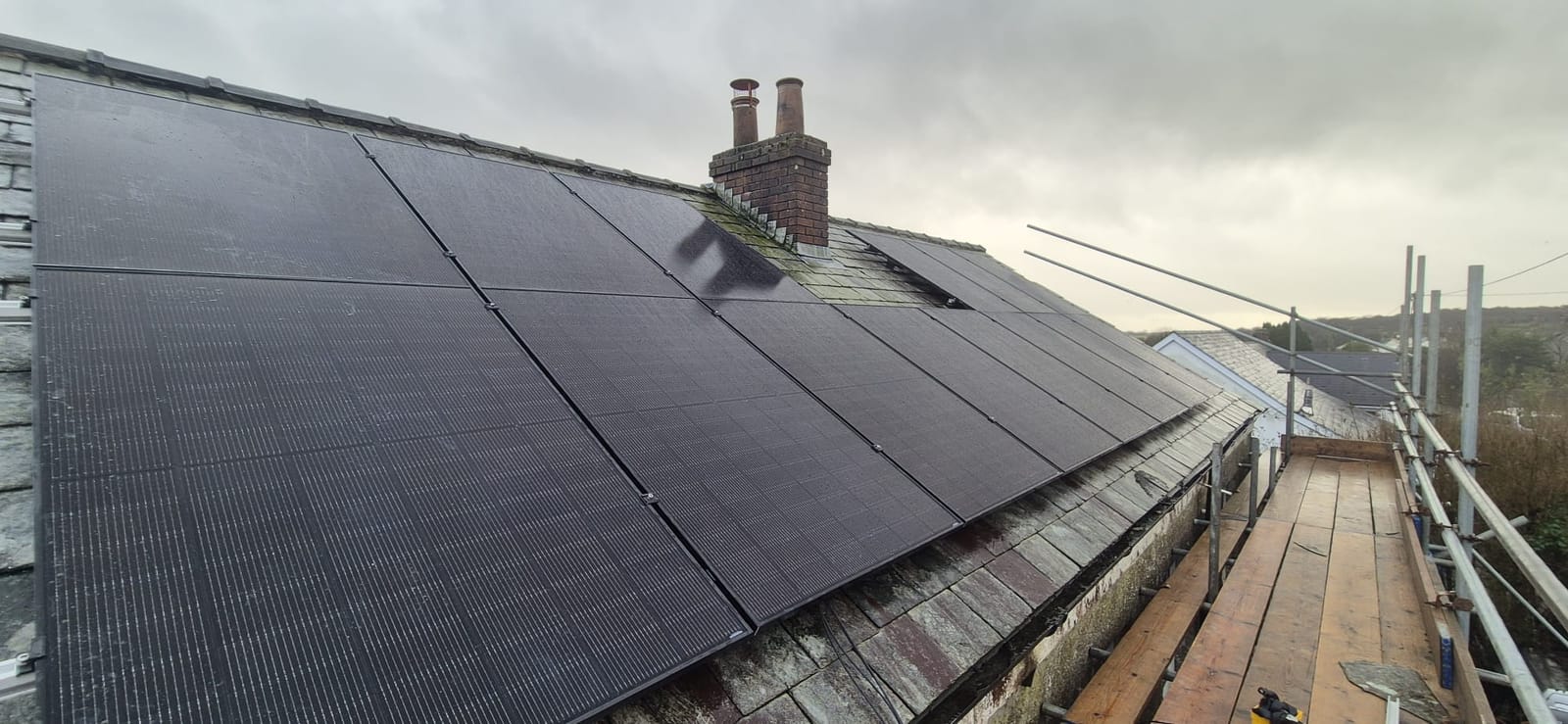
Landlord solar is sized to the EPC model and to who pays the bill, never to a homeowner usage profile. For a single buy-to-let house we typically design 3 to 5 kW, around 7 to 12 panels over roughly 15 to 28 square metres of roof, generating about 2,600 to 4,500 kWh a year. Bills-inclusive HMOs justify a larger array, usually 4 to 8 kW (10 to 18 panels, around 20 to 45 square metres) generating 3,500 to 7,200 kWh, because here the landlord is the bill payer and a battery genuinely pays. Off-gas rural lets sit at 4 to 6 kW, and mixed-use buildings with a commercial floor can take 5 to 15 kW. Where the tenant pays, we size a modest array to the rating model so you are not over-capitalising on capacity the tenant benefits from. Where you pay, we size aggressively for self-consumption. A single coordinated survey programme captures the half-hourly data and roof condition for every unit at once, which is what makes a sensible portfolio rollout possible.
Costs, payback and tax relief
A buy-to-let array typically lands between 5,000 and 9,000 pounds fully installed, with a simple payback on energy of around 9 years where the landlord captures the value. HMOs run 7,000 to 14,000 pounds for a 4 to 8 kW system with a payback near 6 years, the best in the private rented sector, because the landlord keeps the saving. For a standard single let where the tenant pays, there is no direct energy payback to the landlord, so we do not pretend there is. On tax, the position turns entirely on ownership structure. If you hold the property personally as a residential let, you cannot write the panels down as plant and machinery, because the furnished holiday let regime and its capital allowances were abolished from April 2025, leaving only Replacement of Domestic Items Relief. If your portfolio is held in a limited company (an SPV), solar is qualifying plant and the company can use the Annual Investment Allowance (100% relief up to 1m pounds) and potentially the 50% First Year Allowance, up to roughly a 25% effective corporation-tax saving on qualifying spend in year one. Always confirm with your accountant. Our cost guide works through both routes.
Funding routes
Solar itself is not grant-funded for landlords, but it sits inside a stack of schemes that subsidise the wider journey to band C. The Smart Export Guarantee pays the named account holder, typically 3 to 15p per kWh in 2026 (supplier-set, so shop around), for surplus you export, which is one of the few direct cash returns where the tenant pays the bill, so register the system in the landlord name where appropriate. The Boiler Upgrade Scheme is open to all landlords at 7,500 pounds for an air source or ground source heat pump (rising to 9,000 pounds for off-gas oil or LPG homes from July 2026) and 2,500 pounds for an air-to-air heat pump from April 2026, with one grant per property and no cap on the number of properties, and from 28 April 2026 the previous EPC requirement was removed. For incorporated portfolios, capital allowances are the genuine tax route on the solar spend itself. Tenant-led schemes can stack on top: ECO4 (to December 2026) and the Warm Homes: Local Grant (to 31 March 2028) let qualifying tenants unlock funded insulation and heating with your consent. The full picture is set out on our grants and funding page.
Compliance and sector considerations
Beyond MEES and the EPC C deadline, the practical hurdles are consent, grid and planning. An MCS-certified install is required for SEG eligibility, Building Regulations Part P (electrical) and Part A (roof loading) apply, and a DNO notification is needed: G98 covers small single-phase installs up to 3.68 kW per phase (notify after install), while anything larger needs a G99 application submitted before work starts. Rooftop solar on houses is generally Permitted Development within limits (panels not protruding more than 200mm, not on the principal elevation of a listed building, restrictions in conservation areas), listed buildings need Listed Building Consent, and flats have tighter rules. The defining issue for leasehold and shared-roof property is third-party consent: solar is one of the improvements government explicitly cites as needing freeholder or managing-agent agreement, and where genuine best efforts are refused, a five-year third-party-consent exemption can be registered on the PRS Exemptions Register. That is an evidenced backstop, not a planning strategy. Tenant access has to be coordinated too, since works happen around an occupied, let property. For shared-roof blocks see our page on solar for rental flats.
How we approach a portfolio roll-out
For a portfolio landlord, EPC C is not a per-property decision, it is a multi-year capital programme. The installer market will bottleneck hard as 2030 approaches, so rolling out across your units early avoids the last-minute scramble, spreads capex and de-risks the compliance wall. We model the whole portfolio's path to compliance as one piece of work, then sequence it. For each unit we establish who pays the bill, model the rating uplift the array delivers alongside the cheapest fabric measures to clear band C inside that property's cap, and prioritise the units where the return is real cash (bills-inclusive HMOs) ahead of those where it is deferred asset value. Volume procurement and a single survey programme lower the per-unit cost below one-off installs, and for incorporated portfolios the Annual Investment Allowance applies to qualifying plant in a way personally-held lets never get. Bills-inclusive HMOs are usually where your first solar capital should go, because the maths flips entirely in your favour, see solar for HMOs.
An illustrative example
As an illustrative composite based on typical UK buy-to-let projects: a landlord with a 1930s three-bed semi let to a working family, where the tenant pays the energy bill and the EPC sat at D, needed a route to band C ahead of 2030 without over-capitalising on a property the tenant runs. A 4.0 kW array of around 10 panels plus topped-up loft insulation generated in the region of 3,600 kWh a year. The direct energy saving to the landlord was nil because the tenant pays the bills, but roughly 140 pounds a year of SEG export income was retained by the landlord because the system was registered in the landlord name. The EPC moved from D to C, the property re-let quickly at the top of the local range, and the total spend sat well inside the 10,000 pound cap and was dated post-October 2025 so it counted. The figures are illustrative and depend entirely on the property, roof, load and tariff.
Wherever your stock sits on the spectrum, from a single accidental let to a 20-unit incorporated portfolio, the plan starts with the same question and ends with a costed route to band C. Read the landlord solar FAQs, work through the cost guide and grants and funding options, then request a free feasibility for your property or portfolio.